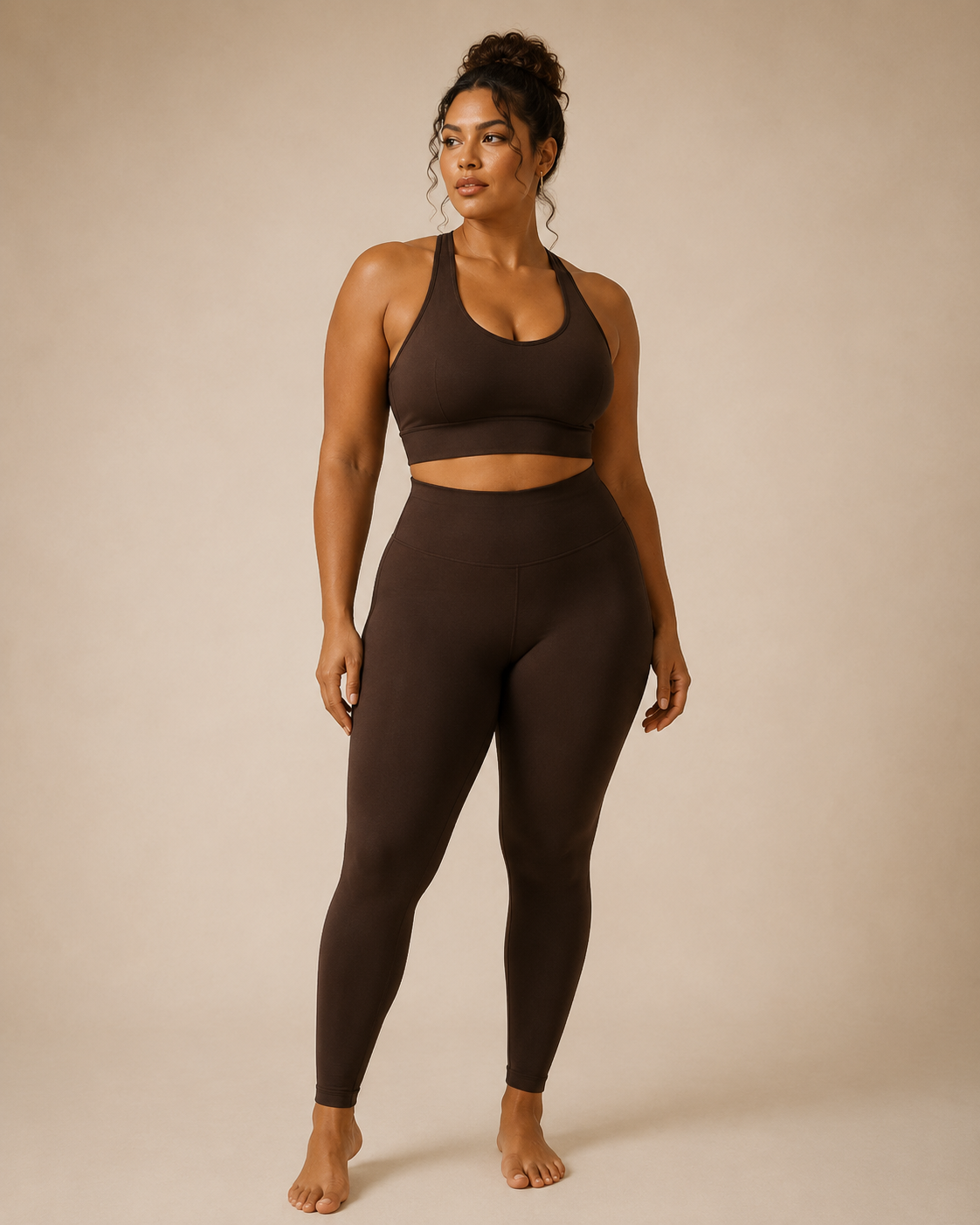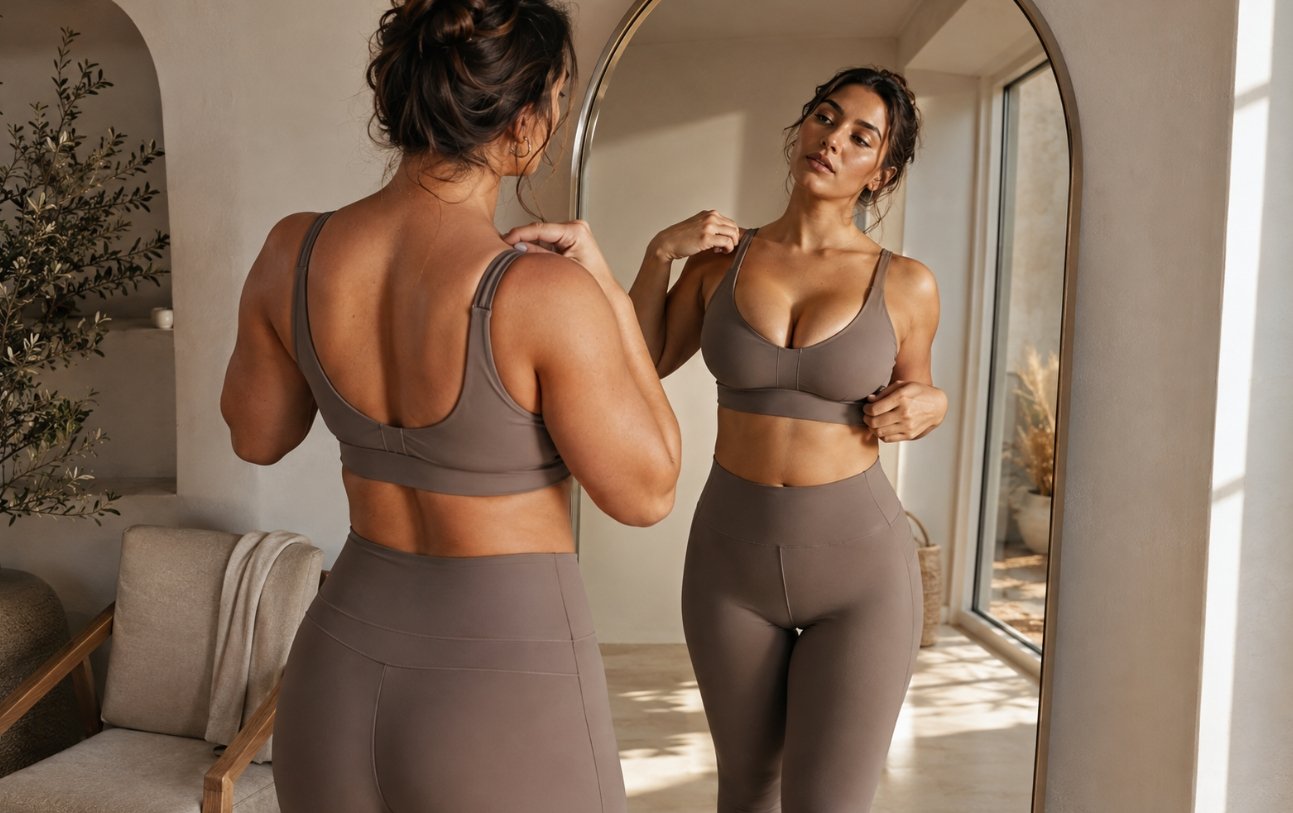
The right activewear should not ask a fuller-busted woman to trade comfort for support or beauty for function. A considered fit begins by understanding how every part of the garment works together.
Support begins beneath the bust
A stable underband carries much of the garment’s support. It should sit level around the body, feel secure, and remain comfortable without digging or riding up.
At Velora, we consider the underband from the beginning of the design process. Its role is to create a steady foundation so the straps and fabric can work with the body instead of carrying the entire load.
Support should feel balanced across the garment rather than concentrated in one uncomfortable area.
Straps should refine the fit, not carry everything
Straps help balance and adjust the garment, but they should not be responsible for all of its support.
When straps dig into the shoulders, it can be a sign that the underband is not providing enough stability. Tightening them further may create more pressure without solving the original fit problem.
Thoughtfully positioned, adjustable straps should complement the underband and help refine the fit. They should not need to compensate for a lack of structure elsewhere.
Coverage is personal
Good design creates thoughtful coverage through construction rather than simply adding more fabric.
Neckline depth, cup placement, side coverage, and silhouette all influence how secure a garment feels. The right amount of coverage will not be identical for every woman or every form of movement.
Some may prefer greater coverage for studio sessions, while others feel most comfortable with a more open neckline for walking or everyday wear. The objective is to offer security without removing personal choice.
Fabric changes the experience
Softness, stretch, recovery, breathability, and support must work together.
A fabric can feel beautiful when first touched but perform differently after several hours of movement. Premium activewear should stretch with the body and return to its shape without becoming loose or distorted.
The right fabric should also remain breathable and smooth while supporting the garment’s internal construction. It should not rely on excessive compression to create a feeling of security.
When softness and structure are balanced, the garment can feel considered from the first wear to the end of the day.
Proportion matters across the complete look
A well-fitted top should visually balance with the rise, waistband, and silhouette of the bottom.
This is one reason separate top and bottom sizing matters. Fuller-busted women may need one size above the waist and another through the hips and legs. A matching set should respect those individual proportions instead of forcing the complete body into one combined size.
When each piece fits independently, the full look feels more balanced. Support becomes part of the design rather than something that needs to be hidden.
The right fit should allow movement to feel natural, clothing to remain in place, and the wearer to focus on the experience rather than constant adjustment.